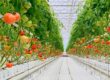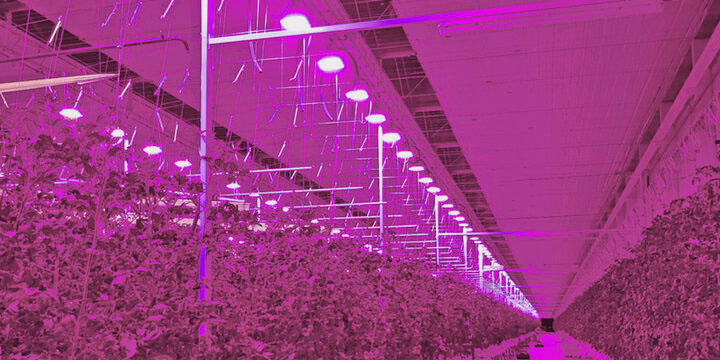
It’s almost impossible to imagine modern greenhouses without LED lights. These systems, mimicking the power of the sun, allow plants to grow 24 hours a day. Imagine, there’s a storm outside or you haven’t seen the sun for days… But inside the greenhouse, tomatoes, strawberries, and greens continue to develop at the same pace. This is where the power of LED lighting comes into play: supporting nature, and sometimes complementing it.
It’s not just about light. The color, intensity, and duration of light are crucial for plant development. For example, blue light accelerates germination, while red light promotes flowering. That’s why LED systems used in modern greenhouses aren’t chosen randomly; they’re specially adjusted according to the plant’s needs. Many people involved in agriculture initially think this is too technical, but as they delve into it, they realize it’s actually a very logical system.
Another advantage of LED lighting is hidden in energy consumption. They consume much less energy compared to traditional sodium lamps and also have a longer lifespan. This means both lower electricity bills and reduced maintenance costs. For farmers, this translates directly into cost advantages. In fact, some producers recover their investments within a few years due to energy savings. In short, LED systems are not just an expense in the long run, but also a serious investment.
24/7 production in greenhouses offers a great opportunity, especially for those farming near cities. Consumers now want fresh produce year-round. Seeing tomatoes on market shelves in winter has become commonplace. To meet this demand, farmers must continue production without interruption. This becomes possible thanks to LED lights. In other words, a suitable growth environment for plants is provided regardless of day or night.
So how do farmers use LED lighting? There’s no single formula as each greenhouse has its own conditions. For example, in northern regions where daylight hours are short, LED lights stay on longer. In the south, they usually play a supporting role, coming on at certain times of the day. Additionally, some farmers produce in completely enclosed greenhouses and provide all light through artificial systems. This is becoming especially common in vertical farming projects.
There’s also the plant health aspect. The right light regime contributes to disease prevention as well. Insufficient light can cause plants to remain weak and become more susceptible to pests. This risk is minimized thanks to LED systems. Moreover, when the right spectrum is chosen, photosynthesis occurs more efficiently. So, not only production speed but also product quality increases. More flavorful tomatoes, more aromatic strawberries, and more vibrant leafy vegetables… These are direct results that reach the consumer.
LED lighting applications in greenhouses are actually divided into several different models.
- Fully supported systems: Models that work 24/7 in areas with insufficient daylight.
- Hybrid systems: Solutions that work alongside the sun, only activating during hours when sunlight is lacking.
- Special spectrum systems: Light combinations that change according to the plant’s growth stage.
Each offers different costs and advantages. The important thing here is that the investment pays off in the long run.
The greatest power of LED lights actually lies in their flexibility. They’re not uniform like classic bulbs; each can be programmed separately. Let’s say you’re growing cucumbers in a greenhouse, you give them more blue light during their growth period. Tomatoes, on the other hand, are more sensitive to red light during flowering and fruit formation stages. With LED systems, you can make all these adjustments with just one touch. This directly affects not only production speed but also product quality.
Also, think about this: in traditional lighting, it was almost impossible to adjust light intensity. It was either at full capacity or completely off. With LED technology, it’s possible to gradually increase or decrease light power. This is especially important for young seedlings, as sudden light intensity can stress the plant. In short, LED is not just about energy efficiency, but also a serious innovation in terms of plant health.
One of the most exciting aspects of using LEDs in greenhouses is the consistency of production throughout the year. In the past, farmers would plan according to the season, with production decreasing in winter. Now, with LED-supported greenhouses, it’s possible to find the same products year-round. Some producers have even expanded into international markets because of this. It would have been impossible to have fresh tomatoes in winter in regions like Russia, Central Asia, or Northern Europe without these technologies.
Of course, every advantage comes at a cost. The initial investment cost of LED systems is still considered high. But because they are long-lasting and consume low energy, they return to most investors’ pockets within 3-5 years. Especially in today’s world where energy prices are rising, this return is happening much faster. Farmers now see this not as an expense, but as an investment in the future.
Sometimes producers use LED systems not just for growth, but for special purposes as well. For example, flower producers apply different spectrums to make colors appear brighter. In some research, light adjustments are made to control diseases without creating a medicinal effect. So LED is not just a “sun-mimicking lamp”; it has become a tool in plant management.
Now let’s talk about some application examples. Large-scale greenhouses in the Netherlands have switched to completely LED-based production. Data obtained there shows yield increases of up to 30% compared to traditional methods. In Turkey, especially in the Antalya and Mersin regions, some large producers have started testing this technology. Initial results are quite promising. More intense and quality products are obtained, and it’s also making a difference in exports. Because buyer countries now look not only at quantity but also at product homogeneity and quality.
Another advantage of LED systems is related to heat management. Traditional lamps emitted a lot of heat, which could disrupt the climate inside the greenhouse. Plants would burn, and humidity balance would be disturbed. LED lights, however, produce much less heat. Thus, the load on climate control systems is also reduced. So, not just lighting, but indirectly heating-cooling costs are also reduced. This directly reflects in the farmer’s pocket.
Actually, there are a few points to consider when implementing LED lighting:
- Adjusting the light spectrum according to the plant’s development stage.
- Keeping light duration balanced within the 12-16 hour range.
- Avoiding excessive light, as this can also cause stress in the plant.
- Programming in harmony with other climate factors of the greenhouse (heat, humidity, CO₂).
When these are taken into account, LED systems really give extraordinary results. But the key point is to make a separate plan for each greenhouse. So there’s no copy-paste solution. That’s why it’s much healthier for producers to work with expert consultants.
The Future of LED Lighting: not just Light, but Smart Systems
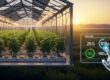
Today, LED systems are installed in greenhouses to mimic sunlight, but the future looks very different. Now light doesn’t just turn on and off, it also “thinks”. Artificial intelligence algorithms collecting data from sensors calculate in real-time how much light each plant needs. In a sense, each plant in the greenhouse is cared for individually. In such a situation, one might wonder: will farmers manage future greenhouses, or will machines?
The Partnership of Artificial Intelligence and LED Lights
Thanks to advanced software, LED lighting systems are no longer just programmed, they learn on their own. For example, it reduces light power when humidity drops, or increases the red spectrum when photosynthesis rate falls below a certain level. This automation lightens the load on farmers and reduces the margin of error. Because small changes unnoticeable to the human eye are monitored second by second by sensors.
Sustainability Dimension
One of the most talked-about topics in agriculture is sustainability. In a period where energy prices are rising and the climate crisis is felt more every day, LED technology has become almost a savior for farmers. Its lower energy consumption, longer lifespan, and less heat production provide direct environmental benefits. And it doesn’t end there: some farmers are achieving near-zero energy costs by powering LED systems with solar panels. This is both environmentally conscious and economically rational solution.
New Opportunities for Farmers
One of the biggest contributions of LED lighting is the opportunity to diversify production. Plants that could only grow in certain regions before can now be produced in different climates. For example, tropical fruits or exotic plants can be successfully grown in LED-supported greenhouses. This gives farmers the opportunity to both make a difference in the domestic market and open new markets in exports.
In Turkey, especially young entrepreneurs are turning to this field. Unlike traditional agriculture, these technology-based systems require less manpower. Thus, agriculture is no longer just about “working with soil”, but also creating value with high technology.
What Will the Greenhouses of the Future Look like?
Let’s imagine a bit… Roofs covered with transparent solar panels, LED lamps equipped with sensors, automatic irrigation and ventilation systems. The farmer wakes up in the morning and checks his greenhouse from his mobile phone; light settings, humidity, temperature, all on his screen. If he wants, he can update the system with a single touch. This is not actually a dream, it’s a real model applied today in the Netherlands and Japan. It has also started to spread rapidly in Turkey.
Another trend is vertical farming. That is, systems that rise floor by floor instead of traditional horizontal greenhouses. LED lighting plays a key role here, because light needs to reach each layer equally. Thanks to vertical farming, it becomes possible to produce even in the middle of cities. Maybe in a few years, we’ll start seeing greenhouses in Istanbul’s skyscrapers.
The Question in Farmers’ Minds: is it Worth the Investment?
The most frequently asked aspect of LED systems is the high initial investment cost. But this needs to be said: this is not an expense, but an investment in the future. Because when you consider energy savings, longer usage life, and product quality, the farmer’s profit increases every year. Some producers see returns without waiting five years. Especially for those who export, these systems have become almost a necessity. Because competition in the foreign market is now won not only with price but also with quality.
A Final Touch
LED lighting has been one of the most important steps changing the face of greenhouse farming. Now there’s production not just during the day, but at night too. Plants are healthier, products are of higher quality, and the farmer’s hand is stronger. And everyone who applies this technology correctly will be one step ahead in the agriculture of the future.
So, is your greenhouse ready to work day and night? If you still have questions in your mind, get in touch with us — let’s plan the most suitable solution for you together.