Choosing the right greenhouse cooling supplier in the UAE is a critical decision that goes far beyond comparing initial prices. A successful project depends on a supplier’s engineering capability, their understanding of the region’s unique climate challenges, and their commitment to long-term performance and support. The best partner will act as a technical consultant, ensuring your system is designed for your specific location, crop, and operational goals.
This guide provides a framework for evaluating suppliers, comparing technical quotations, and identifying the key factors that contribute to a reliable and efficient greenhouse cooling system in the demanding environment of the United Arab Emirates.
The Unique Climate Challenge in the UAE
The UAE’s climate is not uniform, and a one-size-fits-all approach to cooling is destined to fail. A competent supplier must differentiate their design based on specific local conditions. The primary challenge is managing high temperatures, but humidity plays an equally important role in system selection and performance.
Two distinct climate profiles dominate the region:
- Coastal Areas (e.g., Dubai, Abu Dhabi, Sharjah): These regions experience very high humidity, especially during the summer months. This significantly reduces the effectiveness of evaporative cooling, as the air is already saturated with moisture. System design here requires careful calculation of air exchange rates and may necessitate hybrid approaches.
- Inland Areas (e.g., Al Ain): While ambient temperatures can be higher, the air is typically drier. This lower relative humidity creates a greater potential for evaporative cooling to work effectively. However, systems must be sized for extreme peak temperatures and consider factors like water quality and availability.
Your supplier’s initial questions should include your project’s precise location. If they offer the same solution for a farm in Al Ain as they do for one in Dubai without adjusting design parameters, it is a significant red flag.
Core Cooling Technologies for UAE Greenhouses
Most modern greenhouse cooling in the Gulf region relies on the principle of evaporative cooling. Understanding how these systems work is essential to evaluating a supplier’s proposal. The two primary methods are pad-and-fan systems and high-pressure fogging.
Pad and Fan Cooling Systems
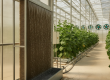
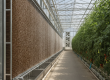
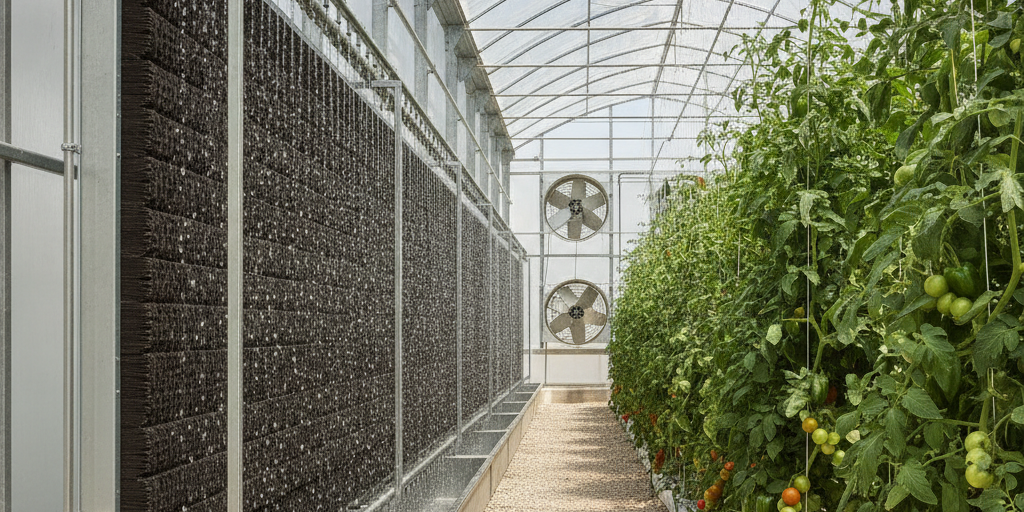
This method involves pulling hot, dry outside air through wet, porous pads located on one wall of the greenhouse. As the water evaporates from the pads, it absorbs heat from the air, lowering its temperature. Large exhaust fans on the opposite wall create the necessary negative pressure to draw the cooled air across the crops. The performance of these greenhouse cooling systems is directly dependent on the outdoor wet-bulb temperature.
High-Pressure Fogging Systems
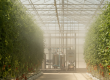
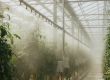
These systems use a high-pressure pump (typically operating above 70 bar or 1000 PSI) to atomize water into micro-droplets. This fine mist, or fog, evaporates almost instantly in the greenhouse air, absorbing heat and reducing the temperature without significantly wetting the foliage. High-pressure greenhouse fogging systems can also be used to increase humidity, which is beneficial for certain crops and stages of growth.
Evaluating a Supplier’s Engineering Capability
A supplier is more than a box-shifter; they are an engineering partner. Your evaluation should focus on their technical process and depth of knowledge. A professional greenhouse cooling supplier in the UAE will demonstrate their expertise through a systematic approach.
1. The Quality of Their Questions
A serious supplier cannot provide a meaningful quotation without detailed information. They should request, at a minimum:
- Project Location: The specific emirate and nearest city to determine local climate data.
- Greenhouse Dimensions: Length, width, and gutter height are essential for calculating air volume.
- Covering Material: Polycarbonate, glass, or polyethylene film all have different thermal properties.
- Crop Type: Different crops have different optimal temperature and humidity ranges.
- Water Analysis: A recent water quality report is crucial for selecting appropriate pad materials and designing filtration for fogging systems to prevent clogging and scaling.
- Electrical Supply: Available voltage, phase, and total power capacity.
- Existing Infrastructure: Details of any current ventilation or shading systems.
2. Transparent Design Calculations
Ask the supplier to explain the basis for their design. They should be able to provide the key parameters used in their calculations, such as:
- Outdoor Design Conditions: What peak dry-bulb and wet-bulb temperatures are they designing for? Using unrealistically mild conditions will result in an undersized and ineffective system.
- Required Air Exchange Rate: How many air changes per minute is the system designed to achieve? This is a critical factor in pad-and-fan system performance.
- Target Indoor Conditions: What are the expected indoor temperature and humidity levels under the specified outdoor design conditions? Note that no supplier should promise a fixed temperature drop.
- Water Consumption: An estimated water usage rate based on the design conditions and operating hours.
3. Equipment Specification and Quality
The quotation should detail the specific components being offered, not just a total price. Look for:
- Fans: Brand, diameter, motor power (kW), and most importantly, airflow capacity (m³/h) at a specified static pressure.
- Cooling Pads: Thickness, height, and material specification (e.g., 5090 or 7090 flute angle, cellulose material with anti-rot treatment).
- Pumps and Pipework: Pump specifications (flow rate and pressure), and material for distribution and fogging lines (e.g., PVC, stainless steel).
- Control Systems: Details of the controller, sensors (temperature and humidity), and their integration with other greenhouse systems.
How to Compare Competing Quotations
When you have multiple proposals, avoid comparing them on price alone. Use a structured approach to evaluate the true value and technical merit of each offer.
Create a checklist to compare the following points side-by-side:
- Scope of Supply: Does the price include just the equipment, or also installation supervision, commissioning, and staff training?
- Technical Completeness: Is all equipment specified with clear performance data, or are the descriptions vague?
- Design Assumptions: Are the suppliers using the same outdoor climate data for their calculations? A proposal based on milder conditions will seem cheaper but will underperform.
- Water Treatment: Is a suitable water filtration or treatment system included, or is it an extra cost? This is non-negotiable for fogging systems.
- Warranty Terms: What is the warranty period for different components (fans, pumps, pads)? What is the process for making a claim?
- After-Sales Support: What level of technical support is offered after commissioning? Do they have experience in the region?
- Exclusions: Carefully read what is *not* included. Common exclusions are civil works (concrete sumps), main power supply cabling, and water storage tanks.
Long-Term Ownership: Beyond the Initial Investment
The total cost of ownership includes the initial purchase price plus ongoing operational costs. A well-engineered system from a reputable supplier can lead to significant long-term savings.
Energy Consumption
The efficiency of the fans and pumps is a major factor in your electricity bill. A supplier should be able to provide the power consumption data for their proposed equipment. High-efficiency motors may have a higher initial cost but can offer a rapid return on investment, especially for large-scale operations common in the UAE.
Water Usage and Quality
Evaporative cooling consumes significant amounts of water. An efficient design minimizes waste. Furthermore, poor water quality can destroy cooling pads or clog fog nozzles in a single season. The cost of frequent replacement of these components can quickly outweigh any initial savings from a cheaper, poorly specified system.
Maintenance Requirements
Ask the supplier for a recommended maintenance schedule. This typically includes:
- Regularly cleaning cooling pads to remove salt and algae buildup.
- Checking and cleaning water filters.
- Inspecting fan belts and motors.
- Cleaning and inspecting fog nozzles.
A system designed with maintenance access in mind will save considerable time and labor over its lifespan. This is especially relevant for large hydroponic greenhouse systems where climate stability is paramount.
Your Next Step: Requesting a Professional Assessment
Choosing the right greenhouse cooling supplier in the UAE is a foundational step for a successful agricultural venture. The process should be driven by engineering diligence, not just commercial pressure. A partnership with a supplier who understands the local climate, asks the right questions, and provides transparent technical data will deliver a system that protects your crops and maximizes your return on investment.
To begin the process, prepare a detailed request for a preliminary assessment. The more information you provide, the more accurate and useful the initial design and proposal will be. Green Climate Technology is ready to assist with your project. Contact us with your project details to receive a comprehensive technical evaluation for your greenhouse cooling needs.
Frequently asked questions
What technical documents should a greenhouse cooling supplier provide with a quotation?
A professional supplier should provide a detailed equipment list with specifications (e.g., fan airflow at a given pressure), a basic layout drawing, and the key design assumptions used, such as outdoor design temperatures and the target air exchange rate.
How can I compare two quotations that use different design temperatures?
You should insist that all suppliers base their calculations on the same, realistic outdoor design conditions for your specific location. A proposal based on milder temperatures will always appear cheaper because it uses smaller equipment, but it will fail to perform when you need it most.
What is the most common mistake when choosing a cooling system in the UAE?
The most common mistake is underestimating the impact of high coastal humidity on evaporative cooling performance. A system that works well in a dry inland area like Al Ain may be completely inadequate in a humid location like Dubai without significant design modifications.
Is a higher-pressure fogging system always better?
Not necessarily. While high pressure (over 70 bar/1000 PSI) is needed to create a fine fog that evaporates quickly, the system's success also depends on nozzle quality, correct placement, water filtration, and integration with the ventilation controls. The overall engineering is more important than a single pressure figure.
Discuss your greenhouse climate project with Green Climate: Contact our team.