Getting an accurate greenhouse cooling quotation in the UAE is the first step toward a successful agricultural project. In a climate defined by extreme heat and variable humidity, an undersized or poorly specified cooling system can lead to significant crop loss and financial risk. A detailed Request for Quotation (RFQ) that provides your engineering partner with precise data is not just a formality; it is the foundation of your greenhouse’s performance and profitability.
This guide provides a comprehensive checklist of the information required to develop a reliable cooling system design and receive a precise quotation. By preparing these details in advance, you enable engineers to calculate the specific heat load of your facility and recommend the most effective and efficient solution for your unique conditions.
Why a Detailed RFQ is Crucial for UAE Greenhouses
The UAE’s climate presents a formidable challenge for controlled environment agriculture. A cooling system that works in a milder climate will likely fail when faced with the region’s high solar radiation and ambient temperatures that can exceed 45°C. A generic inquiry will only result in a generic, and likely incorrect, estimate. A detailed RFQ is essential to address these location-specific challenges.
Climate conditions vary significantly across the Emirates. A greenhouse in a coastal area like Dubai or Sharjah faces high humidity along with high temperatures. In contrast, an inland location such as Al Ain experiences even higher dry-bulb temperatures but with much lower humidity. This distinction is critical for system selection.
Coastal vs. Inland Climate Considerations
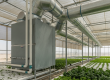
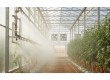
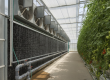
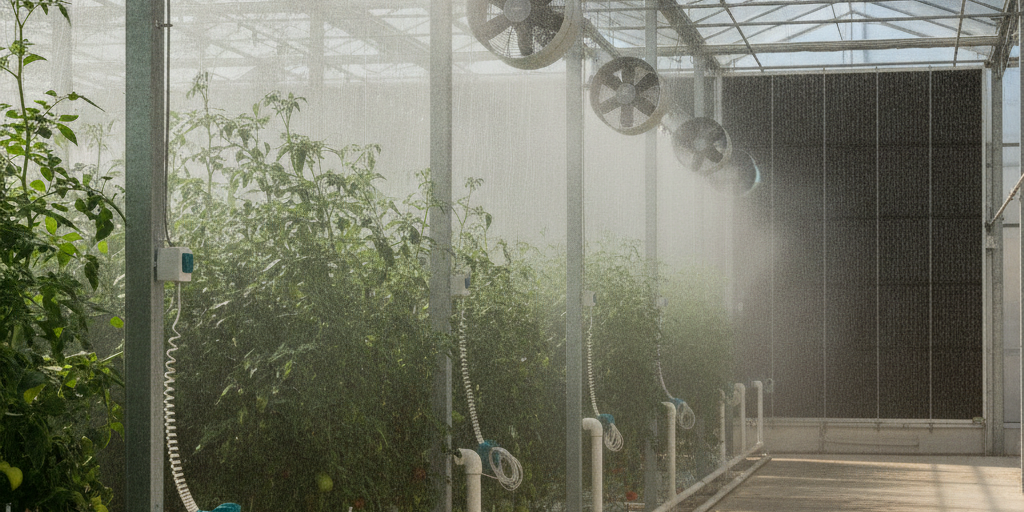
In humid coastal regions, the efficiency of traditional evaporative cooling (pad and fan systems) is reduced because the air is already saturated with moisture. Here, solutions like high-pressure greenhouse fogging systems, which create a very fine mist for flash evaporation, or hybrid systems may be more appropriate. In the drier inland areas, pad and fan systems can achieve a significant temperature drop and are often a very cost-effective solution. Without knowing your exact location, it is impossible for an engineer to make this fundamental design choice.
Core Components of Your Greenhouse Cooling RFQ
To receive a quotation that you can rely on, your RFQ should be structured to provide a complete picture of your project. The following sections break down the essential data points your engineering partner will need.
1. Project and Site Information
This information establishes the context for the entire project. It helps engineers access location-specific climate data and understand the physical layout of your site.
- Project Location: Provide the specific city and Emirate (e.g., Al Ain, Abu Dhabi; or Ras Al Khaimah). This allows for the use of accurate meteorological data for heat load calculations.
- Site Plans and Photographs: If available, provide site layout drawings, greenhouse elevations, and current photographs. This helps in understanding greenhouse orientation, potential shading from nearby structures, and access for installation.
2. Greenhouse Structural Details
The physical characteristics of the greenhouse determine the volume of air that needs to be cooled and the rate at which heat enters the structure. Every detail is important for an accurate calculation.
- Dimensions: Specify the width, length, and gutter height (or highest point) of each greenhouse bay in meters. The total area in square meters (m²) is also essential.
- Structure Type: Note whether it is a single-span or multi-span greenhouse and the total number of blocks or compartments.
- Covering Material: The type of cladding—such as glass, polycarbonate (specify thickness), or polyethylene film (single or double layer)—has a major impact on heat gain. Each material has a different thermal transmittance (U-value) and solar energy transmittance.
3. Agronomic and Operational Data
The cooling system exists to create the ideal environment for your crops. Therefore, your cultivation plan is a critical input for the design.
- Crop Type: Different crops have different optimal growing conditions. The ideal temperature and humidity for tomatoes are different from those for leafy greens or bell peppers.
- Production Plan: State whether you plan for year-round or seasonal production. A system designed for year-round cultivation must be able to handle the most extreme conditions of July and August.
- Target Indoor Climate: Define your desired indoor temperature and relative humidity range. While it’s important to be ambitious, the targets must also be realistic given the external climate and chosen technology.
4. Existing Climate Control Systems
If you are retrofitting an existing greenhouse, a description of the current equipment is necessary to assess compatibility and identify areas for improvement.
- Ventilation: Describe any existing roof or side wall vents, including their size and whether they are manually or automatically operated. Note the quantity and capacity of any horizontal air flow (HAF) fans.
- Shading Screens: Specify if you have internal or external shading screens and their shading percentage (e.g., 50% white screen).
- Current Cooling Equipment: If you have an existing system, describe its type (e.g., pad and fan), age, condition, and why it is being replaced or upgraded.
Essential Environmental and Utility Data
This technical data is non-negotiable for a serious engineering assessment. Without it, any calculations are based on assumptions, which introduces significant risk to the project.
Outdoor Climate Design Conditions
This is perhaps the most critical dataset for sizing a cooling system. If you do not have this data, your engineering consultant can use standardized data for your location, but site-specific measurements are always superior.
- Design Dry-Bulb Temperature (°C): This is the maximum ambient air temperature the system will be designed to handle.
- Design Wet-Bulb Temperature (°C): This value represents the lowest temperature that can be reached through water evaporation. It is absolutely essential for calculating the performance of any evaporative cooling system, including both pads and fogging.
Important: A cooling system’s performance is directly tied to these outdoor conditions. It is physically impossible to guarantee a fixed indoor temperature without defining the outdoor design parameters first.
Water Quality and Availability
Evaporative cooling systems consume a significant amount of water. The quality of that water directly impacts system longevity and maintenance requirements.
- Water Analysis Report: A recent analysis of your water source is mandatory. High levels of salinity (EC), calcium, and magnesium can cause rapid scaling and clogging of cooling pads and fog nozzles, leading to system failure. The report dictates the need for water treatment.
- Water Availability: Specify the available water flow rate (liters per hour or m³/hr) and pressure (bar) at the greenhouse site to ensure the supply can meet the system’s peak demand.
Electrical Supply Details
Greenhouse cooling systems rely on powerful fans and pumps, which represent a significant electrical load. Your available power infrastructure must be able to support the system.
- Available Power: State the total available electrical capacity in kilowatts (kW) or kilovolt-amperes (kVA).
- Electrical Service: Confirm the voltage, phase, and frequency of your electrical supply (e.g., 400V, 3-Phase, 50 Hz).
Defining the Scope of Supply and Services
To compare quotations accurately, ensure each supplier is bidding on the same scope of work. Be explicit about what you expect the supplier to provide.
- Equipment Supply: Is the quotation for the supply of materials only, delivered to the port (CIF) or your site (DDP)?
- Installation: Does the scope include the full mechanical and electrical installation of the equipment?
- Supervision: Alternatively, do you require an installation supervisor from the supplier to manage your own local labor team?
- Commissioning and Training: Request that the scope includes system start-up, performance verification, and training for your operational staff.
- Control System: Clarify if a new climate control computer is included or if the system needs to be integrated into an existing one.
Your Complete UAE Greenhouse Cooling RFQ Checklist
Use this list to gather your information before contacting suppliers. The more complete your data, the faster and more accurate your quotation will be.
- Project Owner & Contact Details
- Project Location (City, Emirate)
- Greenhouse Type (Multi-span/Single-span, No. of Bays)
- Greenhouse Dimensions (Width, Length, Gutter Height for each bay)
- Total Greenhouse Area (m²)
- Covering Material (Glass, Polycarbonate, Film)
- Crop(s) to be Grown
- Production Schedule (Seasonal/Year-round)
- Desired Indoor Temperature & Humidity
- Details of Existing Ventilation and Shading
- Outdoor Design Dry-Bulb & Wet-Bulb Temperatures
- Full Water Analysis Report
- Available Water Flow Rate & Pressure
- Available Electrical Power (kW), Voltage, Phase
- Required Scope (Supply, Installation, Supervision, Commissioning)
- Site Layout Drawings, Greenhouse Plans, and Photographs
Take the Next Step Towards a Productive Climate
A well-prepared RFQ demonstrates a professional approach and allows engineering firms like Green Climate Technology to serve as true partners in your project’s success. By providing comprehensive data, you move beyond guesswork and into the realm of precise engineering, ensuring your investment is protected by a robust and efficient cooling system designed for the unique demands of the UAE climate.
Ready to begin? You can request a greenhouse cooling assessment by sending us your project details. The more information you provide from the checklist above, the more detailed and valuable our preliminary feedback will be.
Frequently asked questions
What is the most important data for a UAE greenhouse cooling quote?
The most critical data points are the precise project location (for climate data), greenhouse dimensions (for air volume), and the outdoor design wet-bulb temperature. The wet-bulb temperature determines the effectiveness of evaporative cooling systems, which are common in the region.
Should I choose a pad-and-fan or a fogging system in the UAE?
This depends on your location and crop. Pad-and-fan systems are effective in drier inland areas like Al Ain. High-pressure fogging is often better for humid coastal areas like Dubai or for crops that require high humidity, as it adds less total moisture to the air than wet pads.
Why is a water analysis report required for a cooling quotation?
Water in the UAE can have high salinity and mineral content, which can quickly clog or damage cooling pads and fog nozzles, leading to system failure. A water analysis allows engineers to specify appropriate filtration or treatment and select more durable equipment.
How does my greenhouse cover material affect the cooling system design?
Materials like glass, polycarbonate, and polyethylene film have different heat transfer and light transmission properties. This directly impacts the total heat load inside the greenhouse. Providing this information is essential for calculating the required cooling capacity accurately.
Discuss your greenhouse climate project with Green Climate: Contact our team.