What is a Heat Pump and How Does It Work? Basic Principles
Unlike conventional heating systems, heat pumps are devices that, instead of directly generating heat, take existing heat from one medium (air, earth or water) and transfer it to another medium. This cycle is usually based on the principles of evaporation and condensation of a refrigerant. Basically, refrigerant circulates in a closed system consisting of a compressor, condenser, expansion valve and evaporator.
- Evaporator: The refrigerant is evaporated by taking low-temperature heat energy from the external environment.
- Compressor: The vaporized refrigerant is compressed to increase its temperature and pressure.
- Condenser: The refrigerant at high temperature and pressure condenses by giving heat to the medium to be heated (building interior, water, etc.).
- Expansion Valve: The condensed refrigerant is depressurized and made ready to evaporate again and the cycle continues.
In cooling mode, this cycle works in reverse; heat is taken from inside the building and given to the outside environment. The main advantage of heat pumps is that for every unit of electrical energy they consume, they have the potential to transfer three to five units or more of heat energy. This ratio is expressed as Coefficient of Performance (COP) or Seasonal Performance Factor (SPF) and indicates the energy efficiency of the heat pump.
Why is Energy Efficiency Important?
Energy efficiency is vital to both lower operating costs and reduce environmental impact. Heat pumps can provide the same amount of heating or cooling while consuming much less energy compared to fossil fuel heating systems. This directly contributes to a reduction in carbon emissions. Especially when used with electricity from renewable energy sources, heat pumps offer almost zero emission heating and cooling solutions.
Recent Developments in Heat Pump Technology
Heat pump technology is constantly advancing and offers many innovations that improve energy efficiency, reliability and application flexibility:
- Advanced Compressor and Refrigerant Technologies: Variable speed (inverter) compressors allow the system to adjust its capacity according to demand, resulting in higher efficiency and stable temperature control. In addition, the development and use of environmentally friendly new generation refrigerants with low Global Warming Potential (GWP) is becoming widespread.
- Intelligent Control Systems and Artificial Intelligence Integration: Modern heat pumps feature intelligent control systems that learn user habits, operate according to weather forecasts and interact with power grid signals. Artificial intelligence integration optimizes system performance in real time, delivering maximum efficiency and comfort.
- Hybrid Heat Pump Systems: Hybrid systems, where heat pumps are integrated with conventional boiler systems, automatically select the most efficient mode of operation when the outside temperature is very low, ensuring both efficiency and security of supply.
- High Temperature Heat Pumps: While conventional heat pumps are generally more efficient for low-temperature heating, recent developments have focused on models that can generate high-temperature heat. These models increase their usability in applications that were previously unsuitable for heat pumps, such as industrial processes or high temperature radiator systems in older, poorly insulated buildings.
- Integration with Renewable Energy Sources: Heat pumps can be easily integrated with solar (solar thermal or photovoltaic) and geothermal energy systems. This integration reduces the total energy consumption of the system and increases the renewable energy utilization rate.
- Compact and Modular Designs: Compact and modular designs, especially in smaller systems such as room heat pumps, simplify installation and increase the ability to adapt to different spaces.
Application Areas of Energy Efficient Heat Pumps
Energy efficient heat pumps have a wide range of applications:
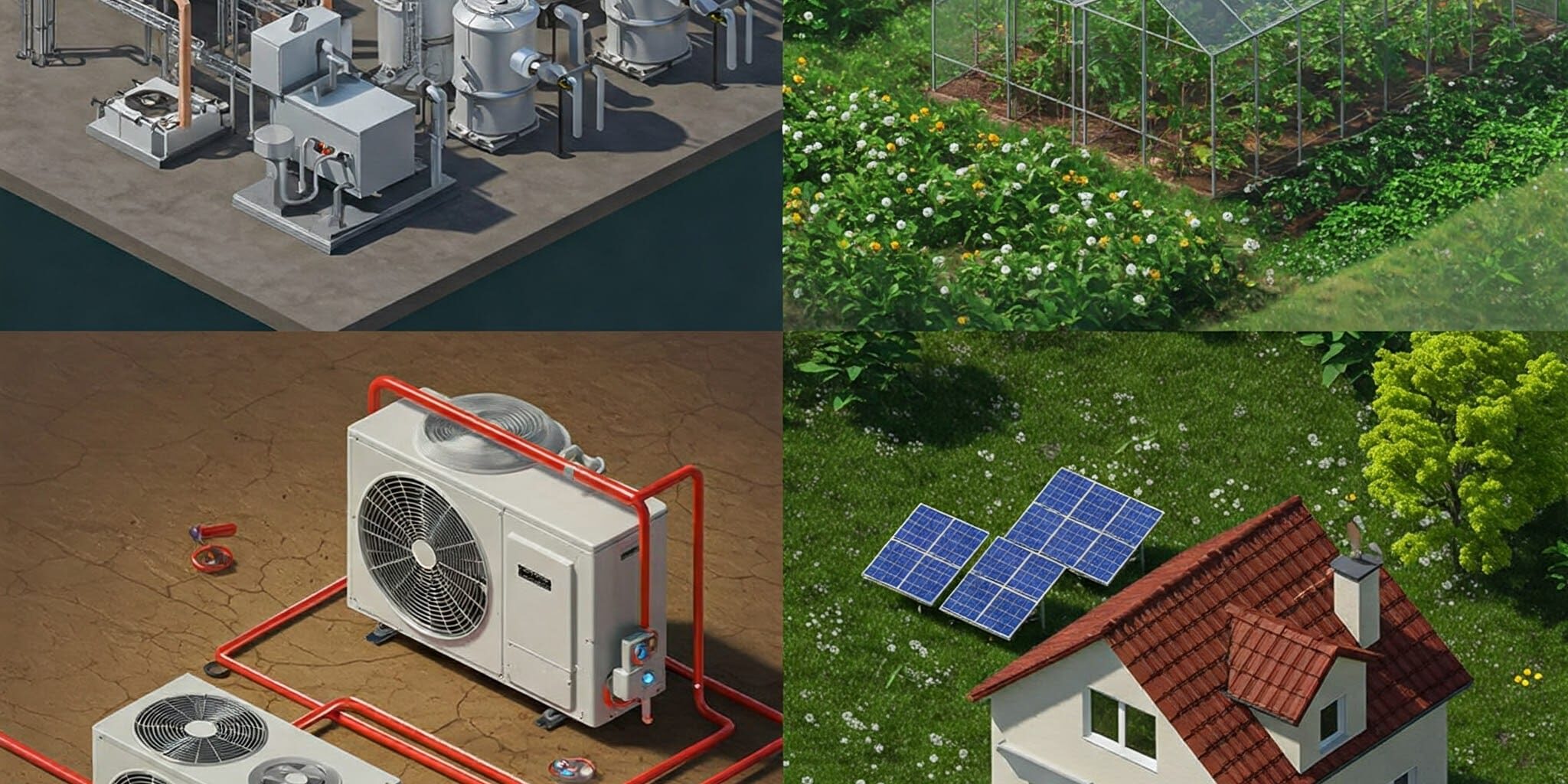
- Industrial Applications: Heating and cooling needs in industrial processes often require large energy consumption. High temperature heat pumps and heat pumps integrated with waste heat recovery systems offer significant energy saving potential in areas such as process heating, drying, steam generation and energy recovery from waste heat. The chemical, food processing, textile and paper industries are the main application areas.
- Agricultural Applications: The agricultural sector has a variety of heat and cooling needs, such as heating greenhouses, drying crops, air conditioning animal housing and heating/cooling irrigation water. Heat pumps, especially geothermal or air-source systems, provide climate control in greenhouses, increasing efficiency and reducing operating costs. Portable heaters also play a role in providing temporary or supplementary heat in certain agricultural applications.
- Commercial and Residential Buildings: The heating, cooling and hot water needs of buildings account for a significant portion of energy consumption. Energy efficient heat pumps reduce energy consumption and carbon footprint while providing comfortable indoor conditions in all types of buildings, from single-family homes to large commercial complexes. Their integration into central heating systems or use as stand-alone units is particularly common.
Advantages of Modern Energy Efficient Heat Pumps
Modern energy-efficient heat pumps offer many important advantages to their users and the environment:
- High Energy Savings: Significant financial savings in the long term thanks to low operating costs.
- Environmental Benefits: Contributes to the fight against climate change by reducing fossil fuel consumption and thus greenhouse gas emissions.
- Operational Efficiency: More precise temperature control and easy operation thanks to intelligent control systems and automation.
- Flexibility: It can meet both heating and cooling needs with a single system. It can take heat from different sources (air, ground, water) and integrate with various distribution systems (radiators, underfloor heating, fan coil units).
- Safety: Since there is no direct combustion, there is no risk of carbon monoxide leakage.
Future Trends and Outlook
The heat pump market is expected to grow in the coming years. Future developments will likely focus on higher efficiency rates, systems that can operate over wider temperature ranges, increased digitalization and tighter integration with other smart building technologies. Grid-friendly “smart” heat pumps, fully integrated with renewable energy sources, will play a central role in the future of energy systems.
Conclusion
Energy efficient heat pumps have become a cornerstone of modern heating and cooling solutions. Ongoing advances in technology are making these systems more efficient, reliable and suitable for a wide range of applications. Given their potential to improve energy efficiency and achieve environmental sustainability goals in a variety of sectors such as industry, agriculture and buildings, investing in energy efficient heat pumps is a smart step both economically and environmentally.