Understanding Greenhouse Heating Cost: More Than Just Numbers
The key to profitability in modern agriculture is creating a controllable production environment. The most critical component of this environment is undoubtedly climate control, especially heating. However, the first question on every investor’s mind is the same: What is the cost of greenhouse heating and what factors influence this cost? As Green Climate Technology, with our experience extending across Turkey from our centers in Antalya and Aksaray, we know that there is no single answer to this question. The cost depends on many variables such as the location, size, insulation of your greenhouse, and most importantly, your targeted efficiency. This guide has been prepared to help you make the most accurate decision for your investment.
Proper system selection not only eliminates the risk of frost in winter months but also provides increased yield and quality throughout the year by ensuring ideal growing conditions for the plant. Therefore, heating cost should not be seen as an expense, but as a strategic item that directly affects the return on investment (ROI).
5 Key Factors Determining Greenhouse Heating Cost
When calculating the total cost of a heating system, it is essential to consider both initial installation expenses (CAPEX) and long-term operating expenses (OPEX). Here are the key factors that directly affect both types of costs:
1. Geographical Location and Climate Conditions
Turkey’s diverse climate zones fundamentally change greenhouse heating needs. For example, the heating needs of a greenhouse in a Mediterranean coastal strip like Antalya are not the same as those in a continental climate region like Aksaray or Afyon. The number of days when the outside air temperature drops below zero, the day-night temperature difference, and the average humidity are the most important factors determining the system’s capacity and, consequently, its cost.
2. Greenhouse Type and Insulation Quality
Heat loss is the biggest enemy of operating costs. Greenhouses, by their nature, are structures that struggle to retain heat. However, modern materials have largely changed this situation.
- Covering Material: Different covering materials such as glass, polycarbonate, or double-layered inflated polyethylene have different heat transfer coefficients (U-value). Materials that provide better insulation increase the initial investment cost but significantly reduce heating expenses in the long run.
- Thermal Screens: Energy (thermal) screens used during the night or on very cold days can reduce heat loss by 40-50%. This directly translates to fuel savings and ensures more efficient system operation.
3. Type of Crop Grown
Each plant has different ideal temperature requirements. For example, the capacity and operating time of a system installed for high-temperature demanding plants like tomatoes or cucumbers will not be the same as for cooler-climate plants like lettuce. Specific needs such as the plant’s root zone temperature, night temperature, and day temperature affect the type of system to be chosen (e.g., air heating only or pipe-rail root and ambient heating) and its cost.
4. Type and Accessibility of Energy Source
The factor that most affects operating costs (OPEX) is the energy source used. Choosing an accessible and sustainable energy source in your region is critical.
- Fossil Fuels: Sources such as coal, natural gas, and fuel oil are widely used. Natural gas is a clean and automation-friendly option, while coal may be cheaper but creates more labor and environmental impact.
- Renewable Energy: For regions close to geothermal resources, geothermal heating is the most efficient and low-operating-cost option among energy production systems. Although the initial investment cost is high, it amortizes itself over the years. Solar energy (solar thermal) can also be used as a supplementary system.
5. Greenhouse Size and Volume
Although cost per square meter is calculated, the total size and especially the height (air volume) of the greenhouse directly determine the overall capacity of the system and the cost of equipment such as piping, pumps, and boilers. Large-scale projects may offer a lower cost per unit advantage, but the total investment will naturally be higher.
Modern Greenhouse Heating Systems: Investment and Operating Cost Comparison
Choosing the right system requires a cost-benefit analysis considering the factors above. Here are the most common modern greenhouse heating systems and their cost dynamics:
Hot Water Pipe-Rail Heating Systems (Radiator System)
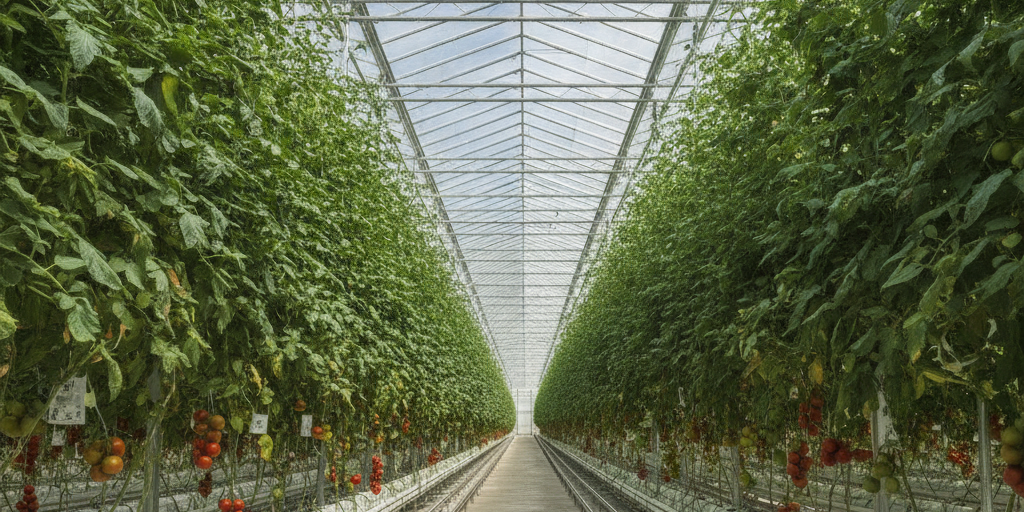
This system is based on the principle of circulating water heated in a boiler through pipes laid inside the greenhouse. These pipes, typically placed between plant rows and along greenhouse side walls, provide homogeneous and stable heat distribution. Especially for crops like tomatoes, peppers, and cucumbers, it maximizes plant health and yield by maintaining ideal temperatures for both the environment and the root zone.
- Initial Investment (CAPEX): High. Includes boiler, pumps, piping (pipe-rail system), automation, and labor costs. As Green Climate, we strive to optimize this cost with our high-efficiency boiler manufacturing solutions produced in our own facilities.
- Operating (OPEX): Medium. Depends on fuel cost. However, thanks to the homogeneous heat distribution it provides, energy efficiency is high, and heat losses are minimal.
Air Heaters (Unit Heaters)
Air heaters, which blow hot air, are a practical solution especially for small and medium-sized greenhouses or situations where heating is only required for frost protection. They are quick and easy to install.
- Initial Investment (CAPEX): Low. Much more economical than pipe-rail systems.
- Operating (OPEX): High. They may struggle to distribute heat homogeneously, which can lead to some areas of the greenhouse remaining colder and the units running continuously. This increases fuel consumption, especially when operating with electricity or fuel oil. Additionally, the airflow they create can increase the risk of humidity-related plant diseases.
Geothermal Heating
This is the most ideal solution for regions with suitable geothermal resources. Hot water extracted from a well transfers its energy to the greenhouse’s closed-loop heating system via a heat exchanger and is then reinjected underground.
- Initial Investment (CAPEX): Very high. Well drilling, pump systems, and heat exchanger costs constitute a significant portion.
- Operating (OPEX): Almost zero. Only the electricity cost consumed by the pumps is involved. Since there is no fuel cost, it is the most profitable system in the long run.
Thinking Beyond Heating: Integrated Climate Control
In modern greenhouse cultivation, heating is not a standalone system. To maximize efficiency, it must work in integration with other climate control systems. For example, flue gas from natural gas or coal boilers can be treated and used for CO2 fertilization systems, which are vital for plants. This both saves on an additional cost and can increase yield by 20-30%. Heating also affects the relative humidity in the greenhouse. Therefore, managing it together with ventilation and fogging systems is critical for plant health.
Conclusion: Get Expert Support for the Right Decision
As seen, the answer to the question ‘greenhouse heating cost’ is hidden in all the details of your project. Choosing the cheapest system can be the most expensive decision in the long run due to high operating costs and low efficiency. Before investing, it is essential to conduct a detailed feasibility study, analyze energy sources, and design a system suitable for your greenhouse’s specific needs.
As the Green Climate Technology engineering team, we are ready to guide you through every stage of your project. You can contact us for a quote to analyze your needs and design the most efficient and economical heating solution tailored for you.
Frequently Asked Questions
Is the cheapest greenhouse heating system always the best option?
No. Generally, systems with the lowest initial investment cost (e.g., simple air heaters) have the highest operating costs (fuel, electricity). For long-term profitability, it is more accurate to calculate the total cost of ownership (initial investment + operating expenses) and consider efficiency.
What practical measures can I take to reduce greenhouse heating costs?
Insulation is the most important factor. Using double-layer polyethylene, preventing air leaks, and using thermal energy screens at night can reduce fuel costs by up to 50%. Additionally, regular maintenance of boilers and systems also increases efficiency and saves money.
Is geothermal heating a suitable investment for every greenhouse?
Geothermal heating is unrivaled in terms of operating cost but is not suitable for every region. First, a geothermal source with sufficient temperature and flow rate must be available in the investment area. Since drilling and initial installation costs are very high, it is generally more sensible for large-scale (typically 50 decares and above) greenhouses and long-term investment plans.
What is the relationship between the heating system and CO2 fertilization?
In boiler systems using clean fossil fuels like natural gas, the flue gas produced by combustion is rich in carbon dioxide (CO2), a valuable nutrient for plants. This gas can be treated and cooled using special systems and then introduced into the greenhouse. This both eliminates an additional cost for CO2 fertilization and significantly increases crop yield by accelerating photosynthesis.
For your greenhouse climate control project, get a free survey and quote from Green Climate’s expert team: Contact us.