A Concept Exceeding the Limits of Traditional Agriculture: What is a Plant Factory?
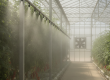
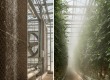
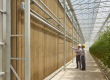
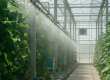
When discussing the future of agriculture, Japan’s plant factories hold a special place among the inspiring modern greenhouse examples worldwide. At first glance, these structures resemble a scene from a science fiction movie, but they are actually closed-loop systems where agricultural production is controlled with the utmost precision. Unlike traditional greenhouses, plant factories are not dependent on sunlight. Instead, the light required for plant photosynthesis is provided by LEDs adjusted to specific wavelengths. Instead of soil, plant roots grow in nutrient-enriched water solutions. These structures are, quite literally, production facilities; all variables such as climate, nutrition, and lighting are optimized down to the degree Celsius and microgram for maximum yield and quality.
Why Japan? Reasons Behind the Rise of Plant Factories
It is no coincidence that Japan is pioneering this technology. The country’s geographical and demographic structure has necessitated such innovative solutions:
- Limited Agricultural Land: Japan has a mountainous geography, and the proportion of arable land is quite low. Plant factories, which enable vertical farming, offer a solution to this problem by multiplying the yield per unit area.
- Risk of Natural Disasters: Natural disasters such as typhoons, earthquakes, and floods pose a constant threat to traditional agriculture. Fully enclosed and protected plant factories eliminate these risks, ensuring continuous and predictable production throughout the year.
- Population Density and Logistics: Delivering fresh food to millions of people living in large cities means significant logistical costs. Plant factories can be established even in the heart of metropolises or in basements, thereby shortening the ‘farm-to-table’ distance, increasing freshness, and reducing transportation costs.
- Obsession with Quality and Safety: Japanese culture places great importance on food quality and safety. Plants produced under completely sterile conditions, without the use of pesticides or herbicides, meet this expectation at the highest level.
Anatomy of a Plant Factory: Core Technologies
At the heart of these futuristic structures lie advanced engineering systems that work in an integrated manner. These areas, in which we at Green Climate specialize, form the foundation of plant factories’ success.
Vertical Farming and Space Efficiency
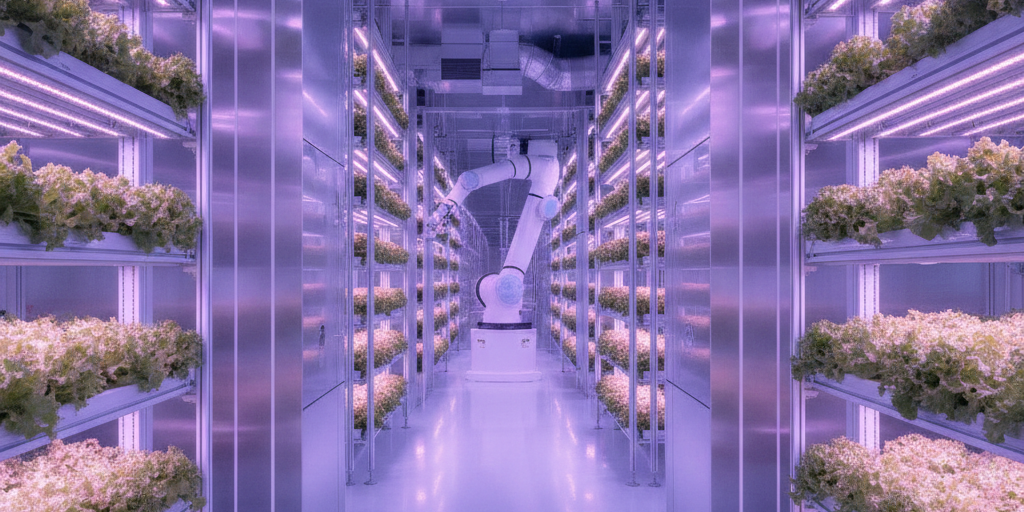
Plants are grown in layers on stacked shelves. This allows for production equivalent to thousands of square meters of agricultural land in a 100-square-meter footprint. This is a revolutionary approach for urban agriculture.
Controlled Environment Agriculture (CEA)
The key to success is the perfect adjustment of all conditions necessary for plant growth.
- Lighting: The sun is replaced by LEDs optimized according to the plant’s needs. Energy efficiency is achieved by using red and blue light spectrums, which are most efficient for photosynthesis. Advanced greenhouse lighting systems automatically adjust light recipes according to the plant’s growth stage.
- Nutrition: Instead of soil, plants are fed with minerals dissolved in water. These hydroponic greenhouse systems ensure that the plant receives exactly the nutrients it needs and offer 90-95% water savings compared to traditional agriculture.
- Climate Control: Temperature, humidity, and airflow are kept constant within the plant’s ideal growth range. This delicate balance minimizes disease risk and accelerates growth.
- Air Quality: The enclosed environment allows for the enrichment of carbon dioxide levels in the air. With effective CO2 fertilization systems, the rate of photosynthesis can be increased, boosting yield by up to 20-30%.
Challenges and Potential for Turkey
While plant factories offer numerous advantages, they also have challenges that need to be considered. The biggest challenge is the high initial investment and operating costs. Especially lighting and climate control systems lead to significant energy consumption. At this point, the integration of renewable energy production systems such as geothermal, solar, or ORC becomes critical for the project’s sustainability.
In the context of Turkey, the situation requires a different perspective. Our country is much more fortunate than Japan in terms of sunlight and fertile agricultural land. Therefore, modern glass and plastic greenhouses are still the most economical solution for products like tomatoes and peppers. However, plant factories also hold great potential for Turkey in certain niche areas:
- Production of fresh, pesticide-free, and high-quality greens (lettuce, arugula, basil, etc.) for luxury restaurants and hotels in large cities.
- Cultivation of standardized and pure herbal raw materials for the pharmaceutical and cosmetic industries.
- Production of disease-free and homogeneous seedlings in the seedling and seed sector.
Conclusion: A Step Towards the Agriculture of the Future
Japan’s plant factories are not just technological marvels; they are also a concrete response to global challenges such as increasing world population, climate change, and urbanization. These systems stand before us as the most impressive modern greenhouse examples proving that agriculture can be more efficient, more sustainable, and more predictable. While the widespread adoption of this technology in Turkey may take time, the vision and potential it offers are an important source of inspiration for all agricultural sector professionals.
Frequently Asked Questions
Which products are most commonly grown in plant factories?
Generally, fast-growing, high-value, leafy greens are preferred. Fresh greens and herbs such as various types of lettuce, arugula, spinach, chard, basil, and mint are the most common products. Their economic efficiency for root vegetables or fruits is still lower.
How much more efficient is a plant factory in Japan compared to a traditional greenhouse?
While the increase in efficiency varies depending on the product and system, the yield per unit area can be 50 to 100 times higher than traditional agriculture. This is due to vertical layering and the ability to harvest continuously throughout the year.
Can these systems be fully automated?
Yes, many modern plant factories utilize robotics and artificial intelligence technologies in planting, maintenance, irrigation, lighting, and even harvesting processes. This reduces labor costs and minimizes human error.
Does the taste of products grown in a plant factory differ from naturally grown ones?
Since the factors affecting taste (nutrients, light spectrum, temperature) are precisely controlled, the flavor and nutritional value of these products are consistent and generally quite high. While some consumers may miss the ‘terroir’ effect provided by soil, quality consistency is the biggest advantage.
For your greenhouse climate control project, get a free survey and quote from Green Climate’s expert team: Contact us.