The Dutch Model: A Pinnacle Among Modern Greenhouse Examples
When it comes to food security and sustainable agriculture, the Netherlands is undoubtedly one of the first countries that comes to mind. It is no coincidence that it has become a global giant in agricultural exports, despite limited land and challenging climatic conditions. The secret behind this success lies in its continuously developing high-tech greenhouse farming approach. As Green Climate Technology, we examine the Dutch model, recognized among the world’s best modern greenhouse examples, and its cornerstone energy efficiency strategies from an engineering perspective. Together, we will explore how these systems can serve as an inspiration to further advance Turkey’s agricultural potential.
What Makes the Dutch Greenhouse Model Different?
It would be a great misconception to view Dutch greenhouses as mere plant cultivation areas. These structures are data-driven production factories where every environmental factor is precisely controlled. The model is based on several core principles.
Absolute Precision in Climate Control
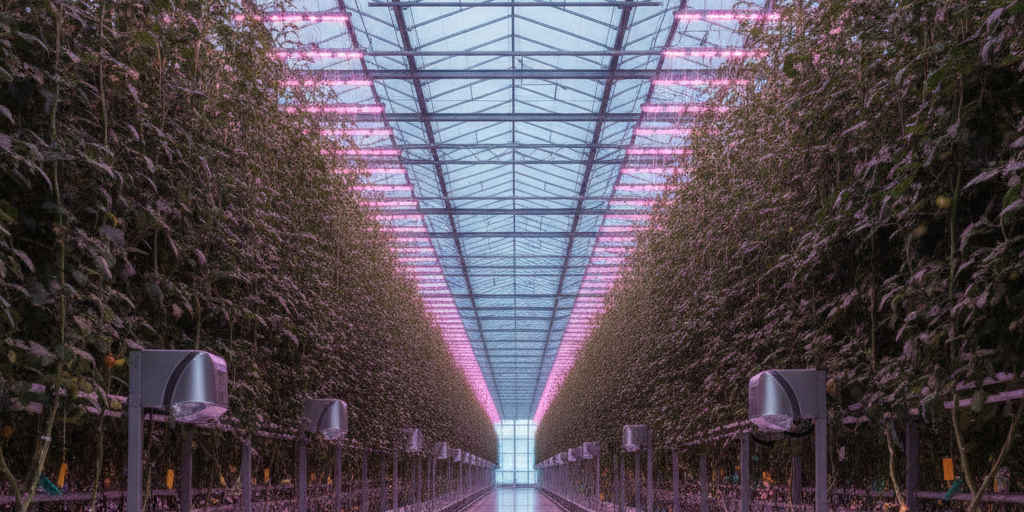
The essence of the Dutch model is to create an ideal microcosm for plant growth, completely independent of external climatic conditions. Critical parameters such as temperature, humidity, light, and CO2 levels are monitored second-by-second by advanced sensor networks. Automation systems process this data instantly, activating heating, cooling, ventilation, lighting, and humidification systems. The goal is to ensure the plant focuses all its energy on growth and fruiting, without experiencing the slightest stress.
High Technology and Data-Driven Agriculture
Every decision in these greenhouses is data-driven. AI-powered algorithms analyze historical growth data, real-time climate conditions, and market expectations to create the most efficient production scenarios. Irrigation and fertilization, through soilless cultivation or hydroponic greenhouse systems, deliver the nutrients plants need to the root zone with millimeter precision. This approach reduces water and fertilizer use by up to 90% while significantly increasing productivity.
Sustainability and Circular Economy
The Dutch model manages resources not with a ‘use-and-dispose’ mentality, but with a ‘use-transform-reuse’ principle. Drainage water is collected, treated, and reused, preventing water waste. Carbon dioxide from energy production, instead of being released into the atmosphere, is purified and injected into the greenhouse via CO2 fertilization systems, serving as a valuable nutrient for plants. This circular approach minimizes environmental impact and reduces operational costs.
Energy Efficiency: The Heart of Dutch Greenhouse Cultivation
It is clear that such a high-tech system has significant energy requirements. The true genius of the Netherlands lies in developing solutions to meet this energy demand in the most efficient and sustainable way. Since energy is one of the largest cost items, efficiency directly impacts project profitability.
Cogeneration (CHP) Systems
Cogeneration, or Combined Heat and Power (CHP) systems, form the backbone of the energy infrastructure in Dutch greenhouses. These natural gas-fired plants simultaneously meet three critical needs: electricity, heat, and CO2. The electricity generated powers LED lighting systems, especially during winter months and cloudy days. The waste heat produced in this process is used for greenhouse heating. Most importantly, the CO2 emitted from the engine’s exhaust, which would normally be released into the atmosphere, is purified through special filters and injected into the greenhouse via CO2 fertilization systems, a valuable nutrient for plants. This provides tremendous efficiency by obtaining three different outputs from a single input.
Geothermal and Alternative Energy Sources
To reduce reliance on fossil fuels, the Netherlands is making significant investments in renewable energy. Geothermal energy, in particular, is increasingly used for greenhouse heating. Hot water from deep within the earth is distributed through a network to heat greenhouse clusters. Additionally, innovative energy production systems such as solar panels installed on facility roofs and ORC (Organic Rankine Cycle) systems that convert waste heat into electricity are becoming widespread.
Thermal Screens and Advanced Covering Materials
Another way to use energy efficiently is to conserve it. Dutch greenhouses feature motorized thermal screens that deploy at night or during very cold weather. These screens act as a blanket, preventing warm air from escaping through the roof and can reduce heating costs by 40-50%. Furthermore, passive energy savings are achieved by using double-layered glass or polycarbonate materials that offer high light transmission but strong thermal insulation.
Implementing the Dutch Model in Turkey: Opportunities and Challenges
Directly copying this model, developed for the cold and cloudy climate of the Netherlands, to Turkey’s sunny and warmer climate is not the right approach. However, great success can be achieved by adapting its core principles.
Opportunities: Turkey’s biggest advantage is abundant sunlight for most of the year. This significantly reduces lighting costs. Additionally, rich geothermal resources in regions like the Aegean and Central Anatolia offer a sustainable heating solution for greenhouses. Turkey’s young population and aptitude for agriculture also bring the potential for a skilled workforce to utilize these technologies.
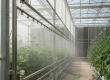
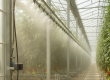
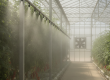
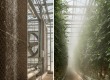
Challenges: The biggest challenge is the high initial investment cost. However, with proper project planning, the return on investment (ROI) is quite short. Another issue is climate adaptation. Especially in hot regions like Antalya, instead of a heating-focused design as in the Dutch model, more emphasis should be placed on cooling solutions such as effective high-pressure fog humidification. As Green Climate Technology, we guide investors with our engineering expertise during this adaptation process, designing the most suitable, efficient, and profitable systems for Turkey’s climate. We have proven this repeatedly in our successfully completed projects.
Greenhouses of the Future: Lessons from the Netherlands
The Dutch model demonstrates that modern greenhouse cultivation is not just about growing plants; it is a symphony of technology, energy management, data science, and biology. To maximize Turkey’s agricultural potential, we must draw inspiration from this integrated and efficiency-focused approach. The future lies in autonomous greenhouses that produce more with fewer resources, minimize environmental footprint, and secure food supply under all conditions. Every correct step taken on this path will further strengthen our country’s position in the global agricultural market.
Frequently Asked Questions
Why are Dutch greenhouses so successful?
The success of the Netherlands is not based on a single factor, but on an integrated approach. The combination of high-tech usage, data-driven agriculture, focus on energy efficiency, a strong R infrastructure, producer associations, and government support are the main elements that bring about this success.
Is the cost of establishing a modern greenhouse high?
Yes, the initial investment cost of a high-tech greenhouse like the Dutch model is higher than traditional greenhouses. However, thanks to much higher yields per square meter, reduced water, fertilizer, and energy costs, and year-round production capability, the return on investment (ROI) is much faster and profitability is higher.
Is Turkey’s climate suitable for Dutch model greenhouses?
It is absolutely suitable, but it needs to be ‘adapted’ rather than directly copied. Turkey’s abundant sunlight is an advantage, while high summer temperatures, especially in southern regions, require more emphasis on cooling systems. With proper engineering and project planning, the principles of the Dutch model can be successfully adapted to Turkey’s climate, yielding very efficient results.
For your greenhouse climate control project, get a free survey and quote from Green Climate’s expert team: Contact us.